Welcome to
Royalton Equine Veterinary Services, P. C.
Providing quality compassionate care for your horse
Request AppointmentLearn More
Equine Veterinarian in Lockport, NY
Royalton Equine Veterinary Services offers a full service ambulatory equine veterinary practice filling the needs of horse owners in Niagara County and surrounding Western New York areas including Erie, Genesee and Orleans counties. REVS provides a clinic setting for more advanced patient needs.
Royalton Equine Veterinary Services Clinic
Please check back often – I update the site frequently with information about horse care, helpful equine resources, photos and local horse shows and events!
If you are a client of Royalton Equine Veterinary Services and would like to list an upcoming event, please email me your information! This service is provided at no charge to clients!
Dr. Jeanne Best
Get Directions


As your Veterinarians, we promise to…
- Provide superior health care and recommendations to maximize your animals’ comfort and performance level. We tailor our approach to your horse specifically.
- Provide routine services, plus available for emergencies 24/7/365 to established regular clients.
- Stay on top of all latest advancements by attending continuing education seminars and conferences and bringing that home to you.
- Maintain accurate and detailed health and dental records.
- Answer all service care issues and render nutritional counseling to foster supreme wellness.
BEMER
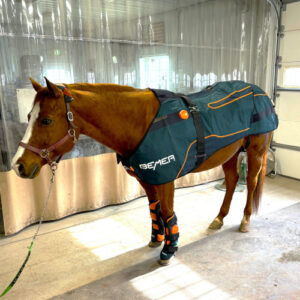
Royalton Equine is now offering BEMER therapy and is an authorized distributor for BEMER products. Use this link to find out more about this patented therapy for horses.
Schedule an Appointment

Online Store
Royalton Equine Veterinary Services is now an authorized distributor for Back On Track products. Use this link to start shopping.
Shop Now
FAQs

What is considered and emergency?
You know your horse. When something is wrong, please do these things:
- *Assess the area- is he eating/drinking/passing normal amounts of manure? Drinking?
- *Check his temperature- a digital thermometer from the drug store is perfect. Normal is 99-100.5
- *Take vital signs- heartrate should be under 42, respiratory rate usually under 20.
When you have this information call us! We will discuss the situation with you and advise on how to continue. We will triage your situation.
Does it need an appointment?
Does it need to be seen the same day? Does it need to be seen ASAP?
Please be prepared to trailer your horse in the event of an emergency. If you have a trailer, keep it current and accessible. If you don’t, line up a few friends that you can call to assist. Many emergencies will do better and be easier to manage at the hospital especially when we are running more that one emergency and traveling all over western New York.
What phone number do I use?
Always call the office voicemail-(716) 629-8384. Leave a message there and follow the instructions if you have an urgent problem.
We ask you to do this because sometimes cell phones don’t work and we can check this number throughout the day for messages.
The emergency phone is (716) 800-5279 and it goes to the veterinarian on call. Do not text in emergencies.
What about texting?
We don’t generally respond to texts- unless we have directed you to text us in certain situations.
Can I email you?
You can, at drbest@besthorsevet.com but we strongly encourage you to also CALL the office! We don’t get to emails as frequently as we do the phone, but it is a way to send us pictures or copies of paperwork.
What are your hours?
Hours: 8:30 am- 4:30 pm M-F
After hours/ Weekends: on Emergency Basis, only for established clients.
What are your areas of service?
Niagara County, Northern Erie County and limited service In other surrounding counties.
What payment options do you accept?
Cash, Check, Major Credit Cards, Care Credit.
What services do you offer?
We place an emphasis on wellness care and preventative medicine including annual exams, vaccinations and bloodwork.
-
Routine and Advanced Dental Care
-
Purchase Exams
-
Lameness exams and treatment plans
-
Veterinary Spinal Manipulation Therapy ( commonly referred to as Chiropractic)
-
Digital Radiography
-
Digital Ultrasonography
-
Upper Airway Endoscopy
-
Low Level Laser Therapy
- BEMER Electromagnetic Therapy
-
Minor Surgeries including, but not limited to, castrations, enucleations, laceration repairs
-
Nutritional Counseling
-
In Cinic appointments available for any of the services listed above
- Hospitalization is available for treatment of sick horses


 ALERT
ALERT